2048 Lines
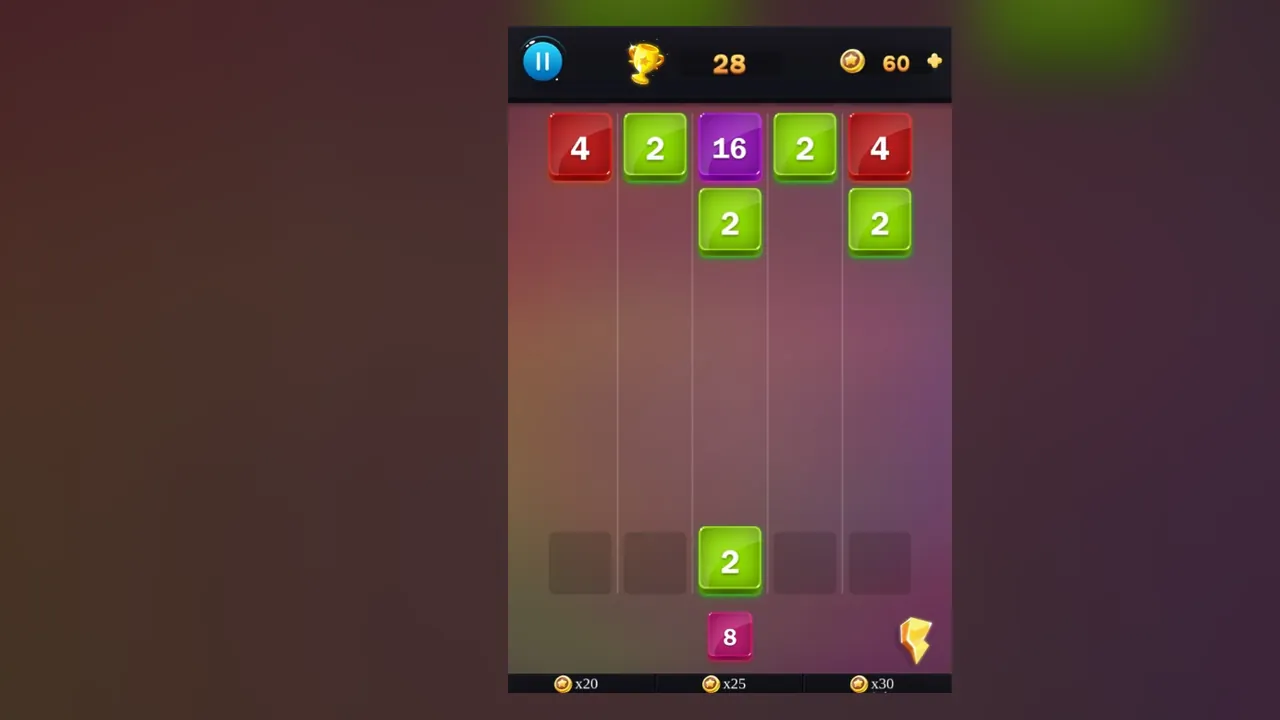
Cubes carry numbers, and when one touches another horizontally or vertically, the values add together. A field at the top moves slowly down, which adds pressure to every merge.
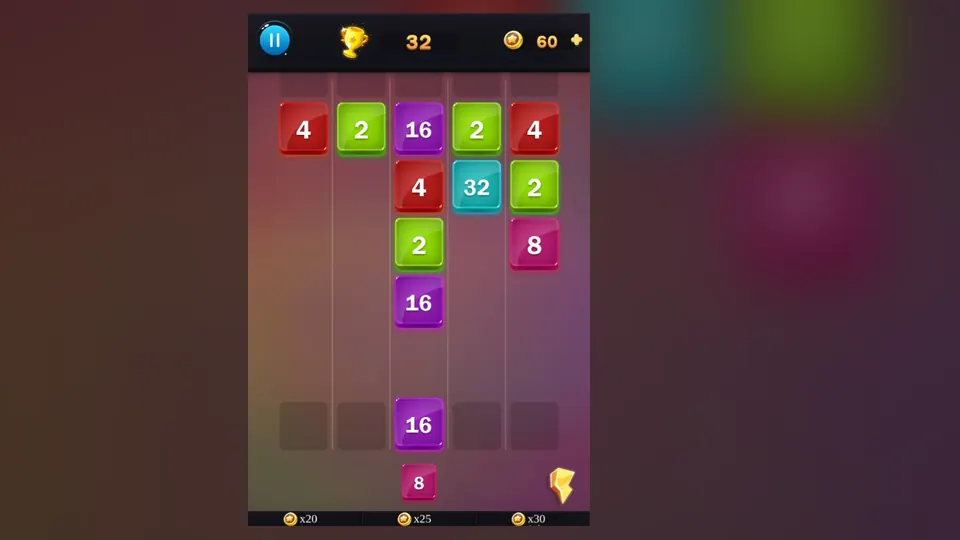
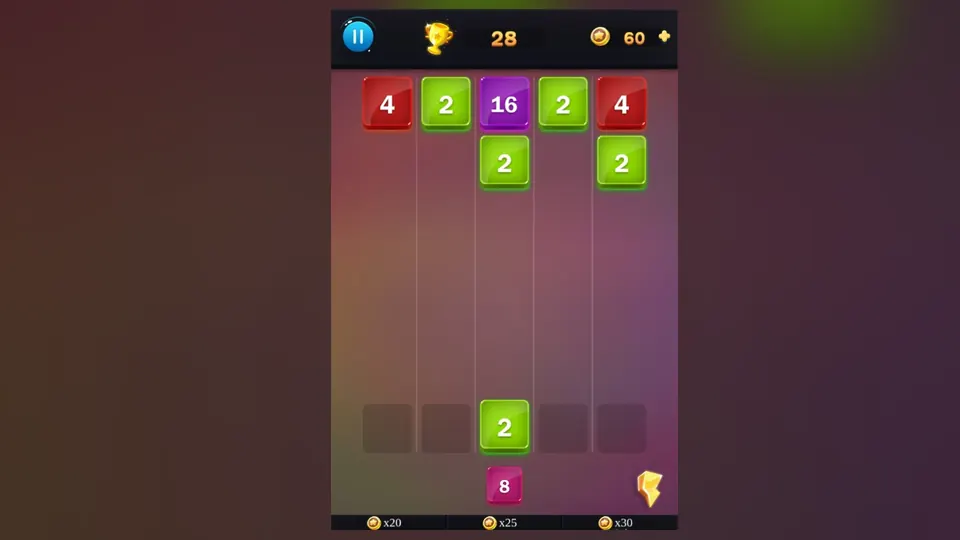
Numbered cubes carry values such as 2, 4, 16 and 32, and they fill five columns. Each cube has its own value, so the board reads quickly. Small values sit next to large ones, and the gaps between them are where the puzzle lives. You will spot merges before you finish reading the rest of the screen.
A score counter and a pause button sit at the top of the screen. The wall of cubes drifts downward, so you act at speed rather than at leisure. That speed is the point: you are adding numbers while the wall keeps drifting toward the bottom. Quick decisions, and a score that gives you something to beat.
How to play
A numbered cube is the piece you control. You send it toward the descending field on the 5x5 grid, and when it meets a neighbouring cube in a row or column, their values add together. Two cubes of 2 become a 4, for example. The aim is to connect cubes correctly and reach the highest score you can.
A round flows in a loop. The field at the top slowly moves down, and a second field holds the cubes you send. Shoot a cube, merge what you can, and watch the wall. The round is over once a cube from the descending wall touches the bottom.
Controls
| Input | Action |
|---|---|
| Mouse or touch | Chooses where the next cube goes on the grid |
| Pause button | Pauses the game from the top left corner |
Tips
- Match equal values first, since two cubes join by adding their values.
- Watch the descending wall more than your own cube.
- Place small numbers close together so they are ready to merge when they touch.
- Pause whenever you need time to study the board.
Screenshots
Our take
The wall keeps moving, so there is little room for slow, careful thought, and that is the main limitation. Numbered cubes in neat columns look like a calm number puzzle, and the game does deliver clear numbers, but it adds steady pressure on top. A pause button helps when you need to read the board. Players who like arithmetic puzzles with a touch of speed will enjoy it. It suits a short break well, though longer sessions work too if you enjoy chasing a higher score.
Common questions
What is the trickiest mechanic?
Timing. The top field moves down slowly while you send cubes, and the round ends the moment a cube from that wall touches the bottom.
Can I pause the game?
Yes. A pause button sits in the top left corner of the screen.
How is the board laid out?
The grid is 5x5, with five columns of numbered cubes. Each cube's value is shown on its face.