PuzzleBrain
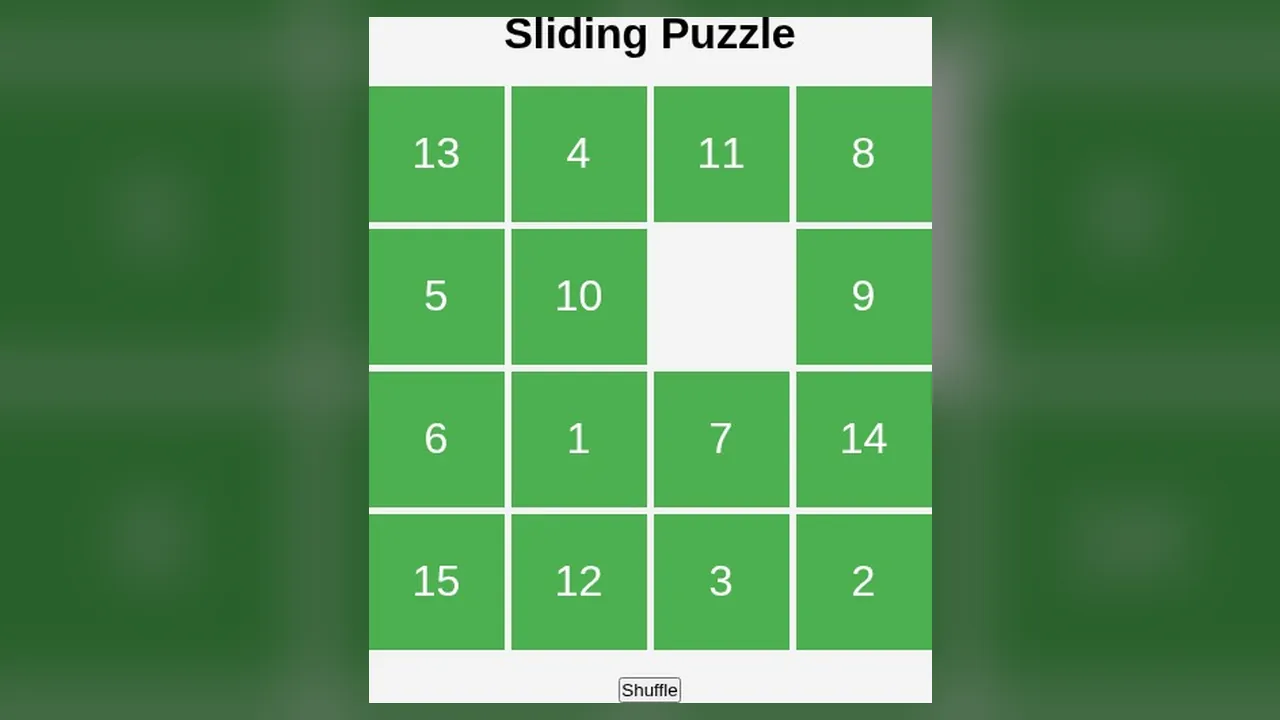
Open the page and the board is already there: a four by four grid of green tiles, one gap, and a Shuffle button underneath. The layout is easy to read at a glance.
The tiles carry numbers from 1 to 15 and arrive mixed, with no obvious order. You slide tiles into the gap one at a time. Each slide moves the gap, and that changes which tiles can move next. Sorting the whole grid into sequence means planning several slides ahead rather than reacting to the last one.
Nothing counts down. The title reads Sliding Puzzle, and the green tiles keep your eyes on the numbers. There is nothing else to learn, and that is part of the appeal.
How to play
A round ends when the tiles read 1 to 15 in order. With no time limits, no clock can end it for you, so you can think as long as you like.
- Find the gap in the grid.
- Slide a tile that touches the gap into it.
- Keep sliding, steering the numbers toward their places in the sequence.
- Press Shuffle if you want the tiles mixed again.
The gap is your only tool, so every slide both helps one tile and disturbs another. Aim for steady progress, and read the board again after each slide. Because the tiles are numbered 1 to 15, you always know exactly where each one is headed.
Controls
| Input | Action |
|---|---|
| Click a tile beside the gap | Slides a tile into the gap |
| Shuffle button | Mixes the tiles again |
Tips
- Solve the top row first, then the next one down, so finished tiles stay out of your way.
- Plan two or three slides ahead before you make a move.
- Keep your attention on where the gap will end up, not only on the tile you are moving.
- Expect to undo a little progress, because a correctly placed tile sometimes has to step aside to let another through.
- Use the last rows for patient work, since they leave the least room to manoeuvre.
- Take your time, as nothing counts down.
Screenshots
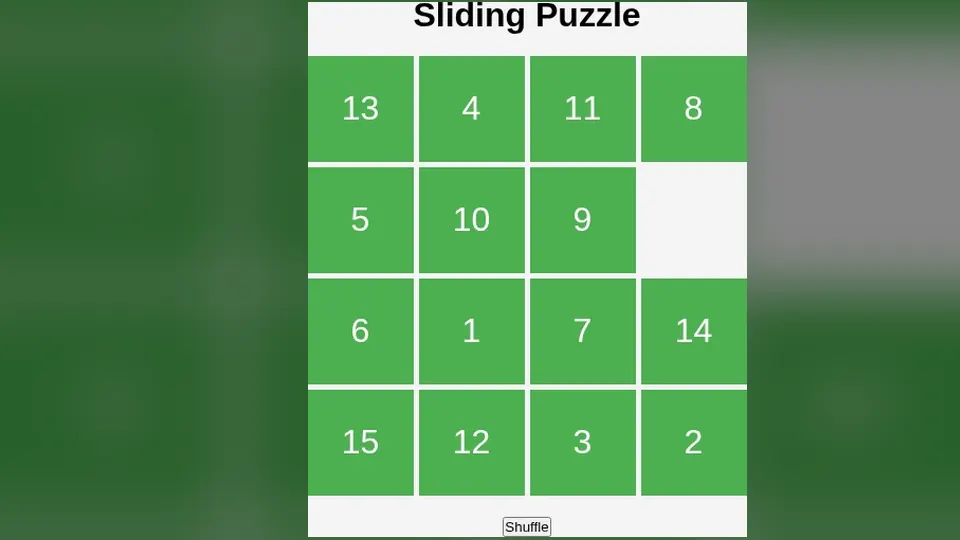
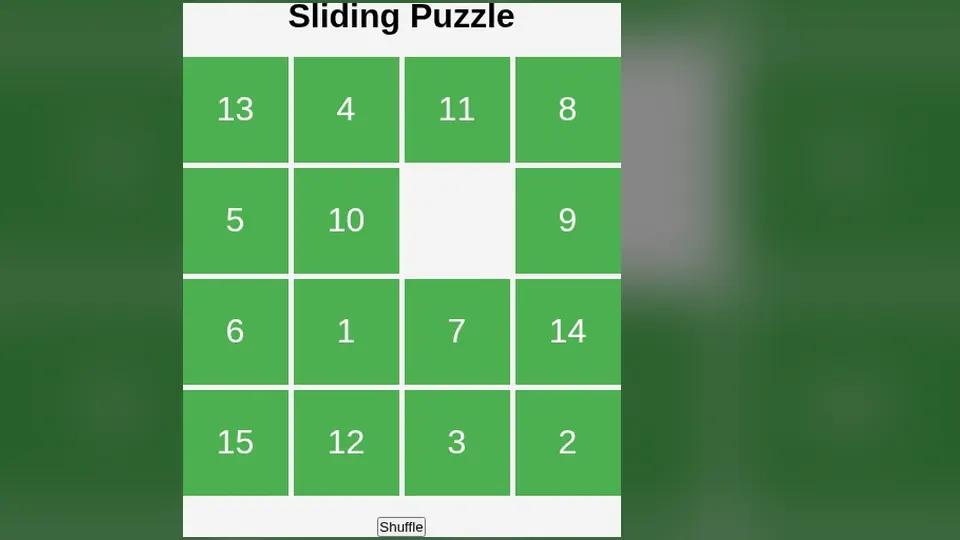
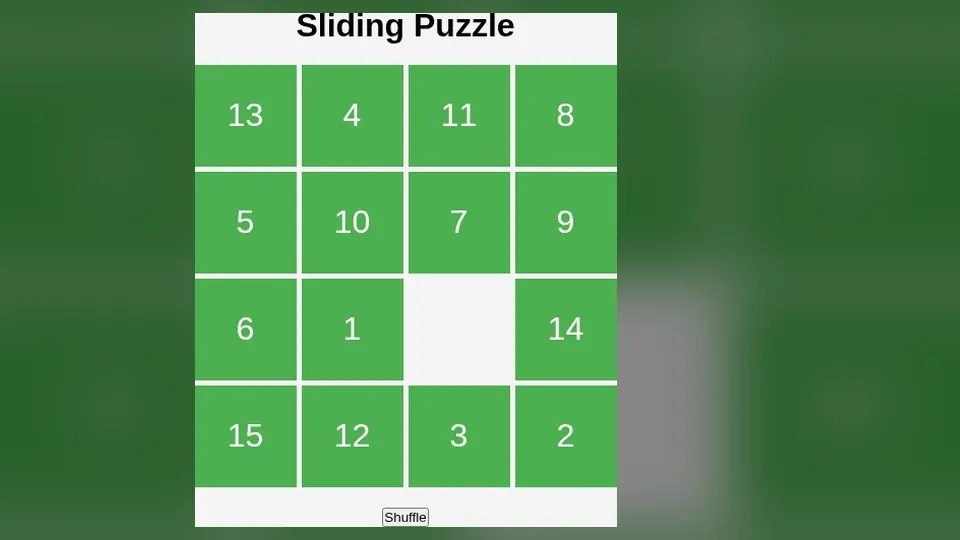
Our take
The strongest point is the lack of pressure: a clean four by four board, numbers 1 to 15, and no time limits, so every slide can be thought through. Beginners learn how one move ripples into the next, and experienced players can plan longer chains of slides. The trade-off is how bare it is. The screen offers the grid, the title and a Shuffle button, so anyone wanting scenery will not find it here. For a patient mind, that is plenty.
Common questions
What ends a round?
The round ends when the tiles sit in order from 1 to 15. There is no time limit, so no clock ends it.
Is there a time limit?
No. There are no time limits, so you can plan each move at your own pace.
What does the Shuffle button do?
It sits under the grid and mixes the tiles again, giving you a fresh arrangement to sort.