How sliding tile puzzles work and why they feel tricky
Which sliding puzzle should you start with, and what should you look at when the first tile moves? The answer depends on how much you want on screen besides the grid. Three browser games show the range: PuzzleBrain, Fruit Puzzle Game and Easy Perfect Fit Jigsaw.
The problem with one empty square
Think of the gap as your only tool. You cannot lift a tile out, swap two tiles or jump one over another. Everything you want to achieve has to be done by walking the gap around the board.
A sliding tile puzzle gives you a grid of tiles and a single gap. Only a tile that touches the gap can move, and it moves into the gap. That is the entire rule.
The trouble starts with what that rule does. Every slide helps one tile and disturbs another, because the gap you just filled has moved to where the tile used to be. A single move rarely fixes anything, so you end up thinking in short sequences instead of single steps.
Finished tiles will often have to step aside again. In PuzzleBrain, a correctly placed tile sometimes has to move to let another one through. In Fruit Puzzle Game, the advice is the same: accept a small step backwards when it opens a better route, then rebuild with the gap somewhere more useful.
Your options
PuzzleBrain
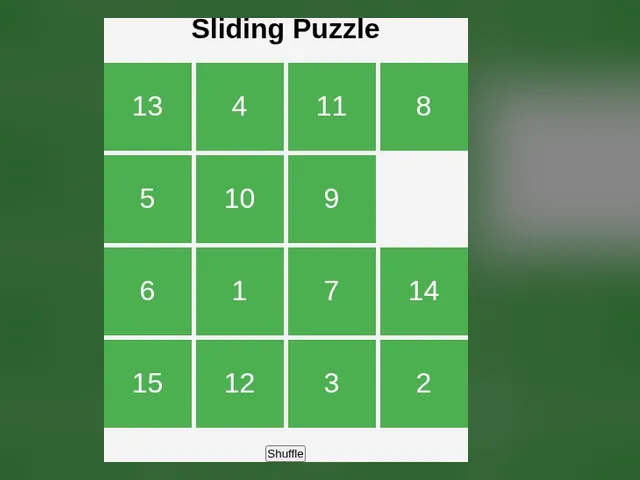
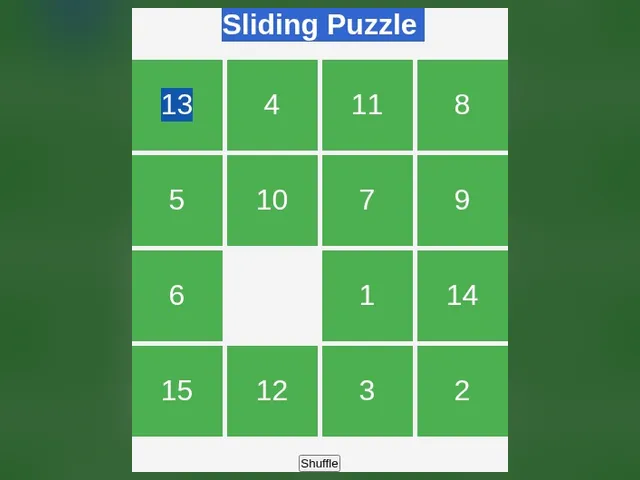
Picture a green grid of numbered tiles that have to end up reading 1 to 15 in order. You are never timed, so no clock can end the round for you. You slide a tile beside the gap into it, and the Shuffle button mixes the tiles again.
Numbers make the goal easy to follow, because you always know where each tile is headed. The screen offers only the grid and the button, so anyone wanting scenery, levels or extra modes will not find them. For a patient mind, that is plenty.
Fruit Puzzle Game
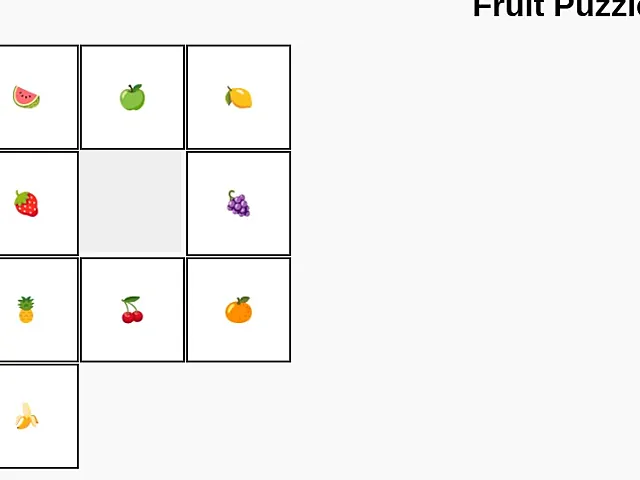
Here the tiles are fruit icons, and one empty grey square sits among them. You slide a tile next to the gap into it, and a Shuffle button is on screen. A round finishes when every fruit is back in its place.
Expect a plain page and small icons, so the look is bare. What you get in return is a grid that is easy to read and a rule that fits in one sentence. It suits a short break better than a long sitting.
Easy Perfect Fit Jigsaw
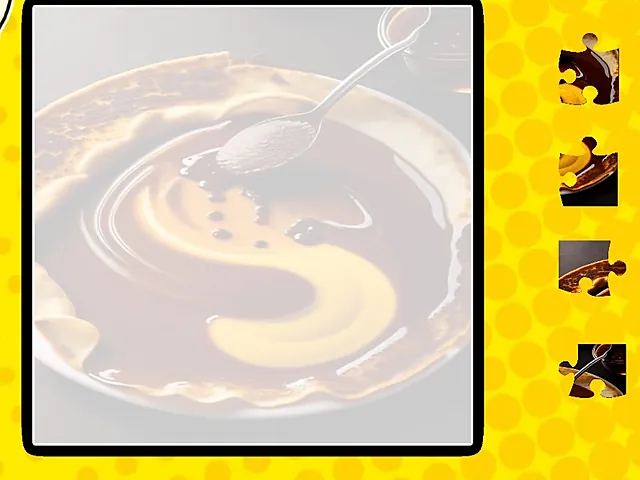
This is the odd one out. You slide jigsaw pieces from columns at the sides into a central frame, guided by a faint picture in the middle. A relaxing soundtrack plays, and later pictures bring more complexity.
Nothing here pushes you around a single gap. Instead you match colours and outlines to the picture around each piece, and when one does not fit, you take it out and try another spot. The bright yellow backdrop leaves the pale guide picture easy to see.
Seen this way, the three games sit on a line. PuzzleBrain is the strictest, with a numbered goal and one gap. Fruit Puzzle Game keeps the gap but swaps numbers for pictures. Easy Perfect Fit Jigsaw loosens the rule further, so you place pieces by sight alone.
What to look for when you start
- Find the gap before anything else, and note which tiles touch it.
- Solve the top row first, then the next one down, so finished tiles stay out of your way.
- Plan two or three slides ahead, and picture where the gap will end up, not only where the tile goes.
- Avoid undoing the move you just made, since that only returns the grid to where it was.
- Save the last rows for patient work, because they leave the least room to manoeuvre.
- Press Shuffle for a fresh start if a tangle feels hopeless.
- In Fruit Puzzle Game, keep one fruit as a fixed reference point and build around it.
For the jigsaw, the list changes. Begin with pieces that carry a very dark or very bright patch, compare each outline with the gap, and work outward from a finished patch.
Which one to pick
Choose PuzzleBrain if you want the cleanest test of the sliding idea: numbers, a four by four board, no time limits and nothing else on screen. Choose Fruit Puzzle Game for the same mechanic with pictures in place of numbers, and use it for a few quiet minutes. Pick Easy Perfect Fit Jigsaw when you would rather place pieces into a picture than untangle a grid.
If this is your first sliding puzzle, begin with PuzzleBrain. Work the top row, watch where the gap lands after each slide, and let the Shuffle button give you as many fresh starts as you like.