A calm way to approach classic sudoku and clue-based logic puzzles
A common mistake in sudoku is to stare at the empty squares one by one and ask what could go in each. It feels thorough, but it turns a grid into a pile of separate questions. A calmer way is to look for the places where the grid is already nearly answered, and the same habit helps in other clue-based puzzles.
Why working square by square tires you out
Take a 9x9 grid with a few dozen empty squares. If you test each square against its row, its column and its box, you repeat a huge amount of checking, and most of it goes nowhere. You also lose the thread of what you had already ruled out.
Clue-based puzzles reward a different order. Instead of asking what goes in each square, ask where the board is most crowded with information. That is where a single glance gives you an answer.
Sudoku Village and the nearly full group
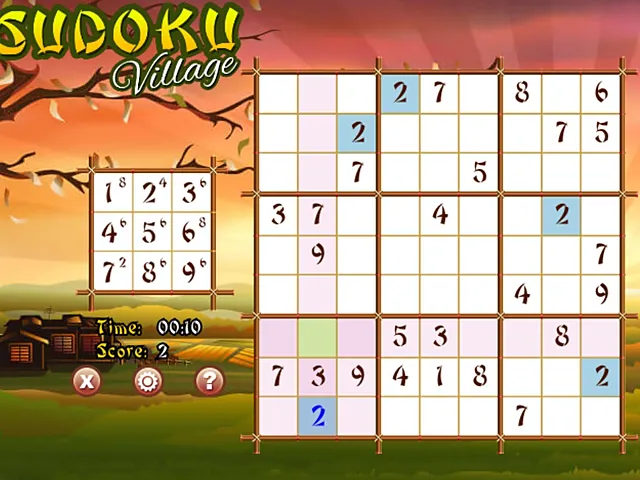
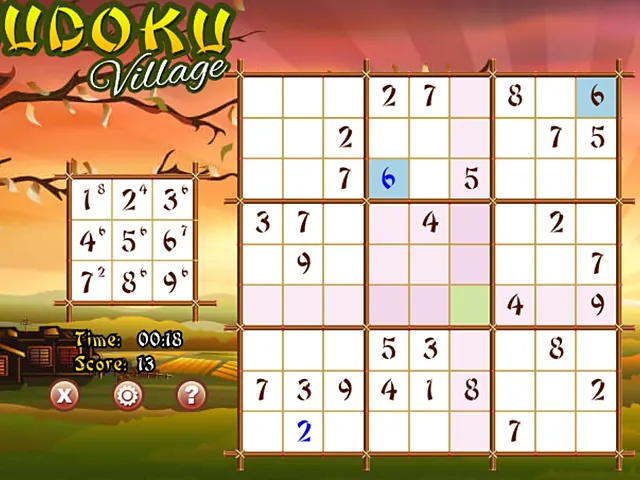
Sudoku Village is classic 9x9 sudoku. Some squares are filled in when a puzzle opens, and you fill every empty square with a number from 1 to 9 until the grid is complete. Each row holds the numbers 1 to 9 once, each column holds them once, and each 3x3 box holds them once.
Numbers already on the grid are your clues. Your own entries appear in blue, so you can always tell what you added from what you were given. A number panel from 1 to 9 offers the digits you can place.
Scan the fullest boxes first
Begin with the 3x3 boxes that already hold the most numbers. Fewer gaps mean fewer possible entries, so one or two squares there may only fit a single digit. Finding one of those is far quicker than testing digits at random.
Then do the same for rows and columns
Seven numbers in a row leave the row nearly finished. Name the two missing digits, then check which of the two empty squares can take each one by looking at its column and box. The same works for columns.
Chase a digit that appears often
Another good move is to pick a digit that already appears many times on the board. Look for the boxes where it is still missing, and see which squares in those boxes are blocked by that digit elsewhere in the row or column. The remaining square is where it goes.
Let the shading do some of the work
When you select a square, shading marks its row, column and box. Use it to see at once which numbers are already taken. It is a tidy way to learn the three rules, because you watch them follow your square around the grid.
A step-by-step pass through a grid
- Look at the whole grid and find the box, row or column with the most numbers.
- Name the missing digits for that group.
- For each empty square in it, check the other two groups it belongs to.
- Place any digit that has only one home, and check it against row, column and box.
- Take a fresh look at the whole grid, because one new number often unlocks a square somewhere else.
That last step is the one people skip. Each placement changes which group is the fullest, so the best place to look next is rarely where you looked last.
Time and Score readouts run beside the grid, but keep a steady rhythm and do not chase them. A correct grid matters more than a fast one. Rushing is how a wrong entry slips in early and spoils everything built on it.
Carrying the habit to Timberland Arrange
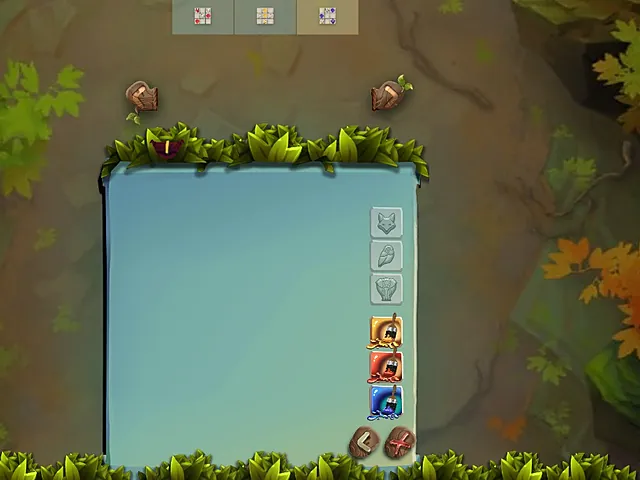
Crossing clues is not unique to sudoku. In Timberland Arrange Puzzle Game, you place nine animals by crossing hints, then paint each one in its colour. A round is won when every animal sits in the cell its hints point to and has been painted in the right one of three colours.
Advice carries over directly. Look for cells where two different kinds of hint cross before you touch any animal. Those crossings are where the puzzle gives itself away, just as the nearly full box does in sudoku.
Place the animal you are surest about first. Every settled cell narrows the choices for the rest, much like each new number in a sudoku grid. Keep the hint panel at the upper left in view as you go.
Actions come in a fixed order, and everything is done with clicks. You click an animal button to select it, click the cell where it belongs, choose a colour, then click the placed animal to paint it. Pick the colour only after the animal is in its cell, because painting is a separate step that comes second.
And to Zero Out Puzzle
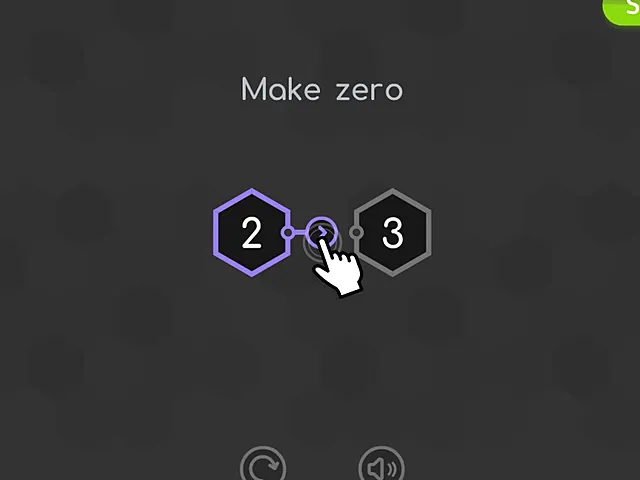
Zero Out Puzzle asks you to turn every numbered block to zero. You press the small arrow between two hexagons, and each press changes the numbers on the blocks it links, with the neighbours shifting too. The clue here is the effect a press has on nearby blocks, so the crossing you look for is where one move touches several numbers at once.
Start with the block that has the fewest neighbours, since a move there disturbs less of the board. Watch the neighbours before every press, and keep an eye on the highest numbers too. If two blocks end up stuck on awkward numbers, try a different order of moves.
How the three differ in practice
| Aspect | Sudoku Village | Timberland Arrange | Zero Out Puzzle |
|---|---|---|---|
| Core task | Fill 1 to 9 | Place and paint animals | Reach zero |
| Input | Number panel | Clicks only | Press the arrows |
| Best clue | Fullest box | Crossing hints | Fewest neighbours |
| Feel | Tidy grid | Calm forest | Plain board |
Timberland Arrange is the most repetitive of the three, since each animal takes a select, a place, a colour choice and a brush stroke. That is calm, but it can feel slow if you want quick action. Zero Out Puzzle is the sparsest, with no scenery and only numbers in hexagons.
Where to start
Open Sudoku Village first and spend a few grids practising the nearly full group scan, with the shading as your guide. It sticks to the classic format, which is exactly why it is a good place to build the habit. Anyone after twists on the rules will find the usual sudoku instead.
Once the scan feels automatic, move to Timberland Arrange and hunt for crossing hints before you touch an animal. Keep Zero Out Puzzle for the days you want a small sum to work through, and try different orders of moves without guilt.