What an outline or silhouette puzzle asks you to do
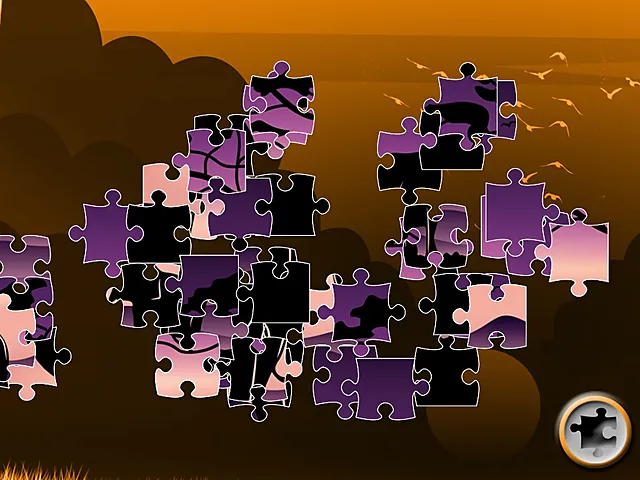
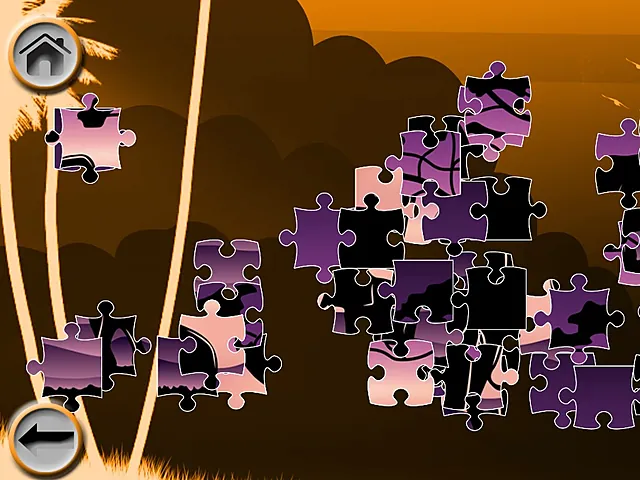
The darkest part of a silhouette puzzle is often the hardest part to place. In Elephant Silhouette Jigsaw, the purple dusk sky gives you a clue on almost every piece, while the solid black shapes give you hardly any. That is the heart of outline puzzles: you have to work out which parts of the shape are telling you something and which are staying quiet.
What an outline puzzle asks of you
You are given a shape, a grey image or an outline, and your job is to rebuild a whole picture from it. Sometimes the pieces are cut like a jigsaw and have to be dragged back into a frame. Sometimes a coloured picture has to be moved onto the outline it matches.
Either way, the outline works as a promise. Each piece has a place where it fits, and the shape narrows down where that place can be. Reading the shape before you move anything is most of the job.
Colour and edge are the two kinds of clue. Colour tells you roughly which region a piece belongs to, and curves, tabs and bumps tell you which neighbours it can sit beside. A good round uses both, one after the other.
Shapes help most when you treat them as a filter. A piece with a curved edge cannot go in a straight run, and a piece with a rare colour cannot go in a region of another colour. Each time you rule out a few places, the remaining ones become obvious.
A step-by-step way to use the shape as a guide
- Look at the whole picture first. Dragging pieces about before you know the scene only spreads them further across the screen.
- Pick your anchors. Choose the pieces with the rarest colour or the most distinctive outline, because they have the fewest places to go.
- Build one area at a time. Finish an edge or a corner patch, then let the neighbouring pieces follow.
- Compare outlines before you commit. Check the curve or the tab against the gap, not just the colour.
- Clear the pile. Move stray pieces apart so they stop covering each other.
- Leave the plain areas for last. Once the main shapes are down, the featureless stretches have only a few spots left.
How three different pictures use the idea
Elephant Silhouette Jigsaw
Here you click an image on the picture screen, pick a mode, and the picture scatters into loose pieces. Each one goes back inside a square frame, and the mouse does all the work through clicking and dragging.
Start with the purple sky pieces, since their colour tells you which band of the picture they belong to. The dark pieces need a different method: follow the curved outlines of the elephants. Large black regions offer few clues, so those stretches can feel slow until the surrounding frame is built.
Marine Puzzle
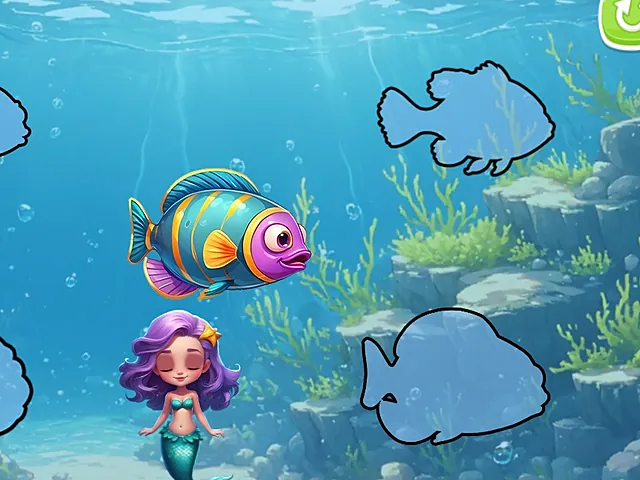
This one skips the cutting altogether. A coloured fish sits in the middle of the screen, outlines surround it, and you move the fish onto the outline that matches. A mermaid waits below the fish in the bright underwater scene.
Because the outlines look alike at first, slow comparison beats fast guessing. Compare the tail and fins first, since they help tell similar outlines apart. Check the curve of the fins next, and pay attention to body width, as round and slim shapes look clearly different from each other. Keeping the whole scene on screen keeps every outline visible at once.
Cute Whale Jigsaw
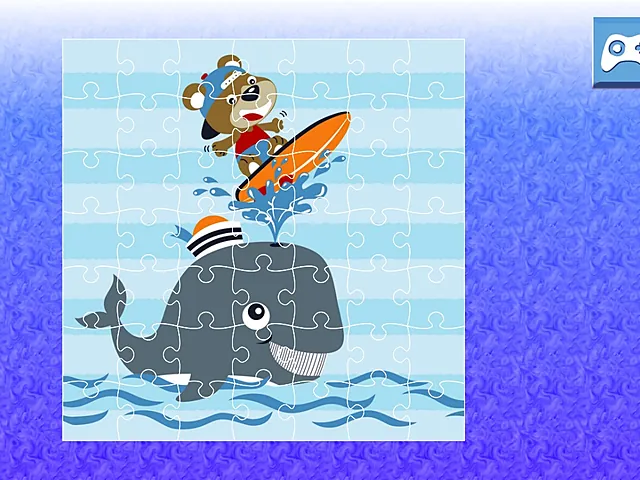
Choosing an image comes first, then the mode you want, and then the pieces shuffle. Then you drag them with the mouse until the whale picture is whole. Dragging is the only action, so there is little to learn before you start.
Grey and orange make the natural anchors. The grey whale and the orange surfboard stand out from the blue background. Check the tab shapes on a piece against the gap before you carry it across the screen, and keep the plain blue background pieces until the end.
Slips that cost time
- Grabbing pieces at random instead of studying the scene.
- Matching on colour alone when two gaps share the same colour.
- Choosing the first fish outline that looks close, without checking tail and fins.
- Leaving a messy pile where pieces hide each other.
- Starting with the plainest pieces, which have the most possible homes.
Why the shape helps and where it stops
An outline gives you structure, but it does not do the matching for you. Two fish outlines can be close enough that only the tail or the curve of a fin separates them. Two sky pieces can share a colour band and still belong in different corners. When that happens, slow down and compare the edge.
Patience pays off more than speed in all three pictures. A careful look at one piece costs you only a few seconds.
Where to begin
If you want a puzzle that rewards a calm look at shapes, open Marine Puzzle first: one idea and a bright underwater scene. Pick Cute Whale Jigsaw when you would like a quiet drag-and-place picture with clear anchors in grey and orange. Save Elephant Silhouette Jigsaw for a longer sitting, when you are happy to build the sky first and then work slowly through the dark areas around it.