Getting through Maze Twist by thinking in rotations
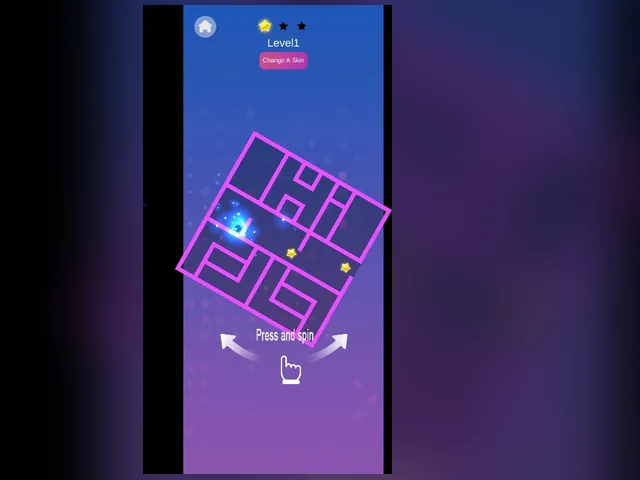
You have spun the maze, and the ball has rolled into a dead end again. It is easy to blame the controls, but the trouble usually lies in how the turn was planned. Maze Twist rewards a different way of thinking, where you picture how each rotation changes the open paths before you make it.
What is different about this kind of maze
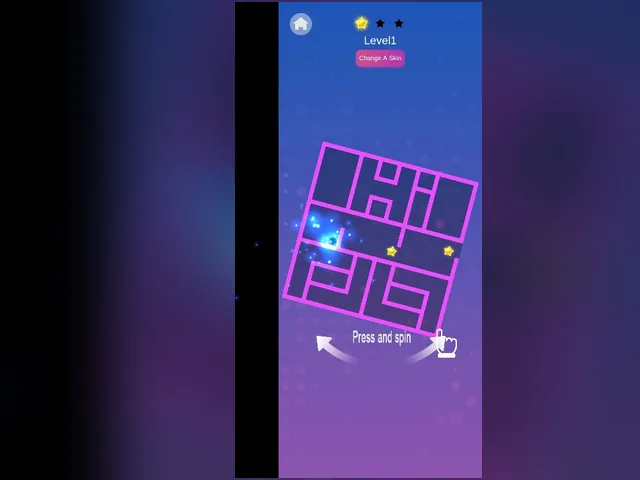
In the neon maze on screen, you do not push the ball directly. You press and spin the maze with the mouse or a finger, as the prompt at the bottom of the screen shows. The ball glows and rolls along as the maze turns.
Nothing else is needed. There are no menus to learn and no extra buttons for movement. A turn in one direction or the other changes which path is open to the ball, and you keep turning until it reaches the end.
That makes it different from mazes where you steer a character along fixed corridors. Here the corridors stay put inside the maze, and it is the whole maze that moves. The question is never where to walk, but which way to turn.
Step by step through a level
- Study the walls before you touch anything. Take a moment to look at the layout. Trace a route in your head from the ball to the end, and note any corridors that look like traps.
- Spot the stars. The stars along the corridors are what you gather on the way. Follow the yellow stars, because they sit along open paths worth taking. The screen shows three stars at the top, and they fill in as you collect them.
- Turn in small amounts. A big spin sends the ball past the corridor you wanted. A small turn keeps it under control and lets you check the result before the next one.
- Turn one way, then check. After each small rotation, look at where the ball has settled and which paths are open. Only then decide on the next turn.
- Back out of dead ends. When the ball lands in a dead end, rotate back the other way. The route out is usually the reverse of the turn that got you in.
- Keep going until the end. Repeat the plan, turn, check cycle until the ball reaches the exit.
Reading the board in more detail
Think in directions, not in moves
Because the maze rotates, it helps to picture where each corridor ends up after a turn. A path that points sideways now may point downward after a quarter turn. When you can see that in your head, you stop spinning at random.
Plan the route first, then the stars
Picking up stars is a good reason to go round a maze again with a better route. On a first pass, get to the end and see where the stars sat. On the next, plan a route that passes through them. The three stars at the top give you a clear target for each level.
Use the skin button if the ball is hard to follow
If you lose track of the ball against the maze, the Change A Skin button lets you try different skins. It is a small option, but a ball that stands out clearly makes it easier to see where it will roll. Pick the skin that makes the ball easiest to follow.
Use small turns to learn the layout
Early turns are as much about learning the maze as moving the ball. Rotate a little, watch which corridors open, then rotate back to compare. It costs a few seconds, and it shows how the walls fit together before you commit to a long route.
Trace the route backwards
Every maze is a pattern of walls, and the solution is a path through that pattern. Try following it with your eyes from the end back to the ball. A dead end often shows itself sooner that way than it does when you work forward.
Common slips and quick fixes
- Spinning too far. The ball runs past the corridor you wanted. Turn less next time.
- Ignoring the stars. They mark open paths. If you cannot see a way forward, check where the stars lead.
- Turning before looking. Wait until the ball has stopped, then read the new layout.
- Staying in a dead end. Rotate back the other way instead of trying a third direction.
Most of these come down to patience. The maze reacts straight away, so there is no gain from hurrying. A steady hand and a clear idea of the route do more than speed.
What to expect from the game
Control is the biggest strength. One press-and-spin motion drives everything, the maze responds at once, and it works the same way with a mouse as with a finger on a touch screen. That makes it easy to pick up for a short session.
The trade-off is that a single motion leaves little else to vary. The game depends entirely on how the mazes are laid out, so its appeal rests on the layouts rather than on extra mechanics. Players who like to see a pattern and tidy it up will enjoy it most.
Stars also give a level some structure. Once you know where they sit, you can judge each turn by whether it brings you closer to the next one, which turns a vague wander into a clear sequence of small goals.
A practical way to start
Begin with the first level and treat it as practice for the turning motion. Spin in small amounts, watch how the ball responds, and keep an eye on the three stars at the top. Do not worry about collecting every star on the first try.
Once the controls feel natural, replay the same maze with a plan. Choose a route that passes through all the stars, rotate back whenever the ball gets stuck, and swap the skin if you struggle to follow the ball. That order of learning the motion first and chasing stars second makes each level feel calm instead of fiddly.